
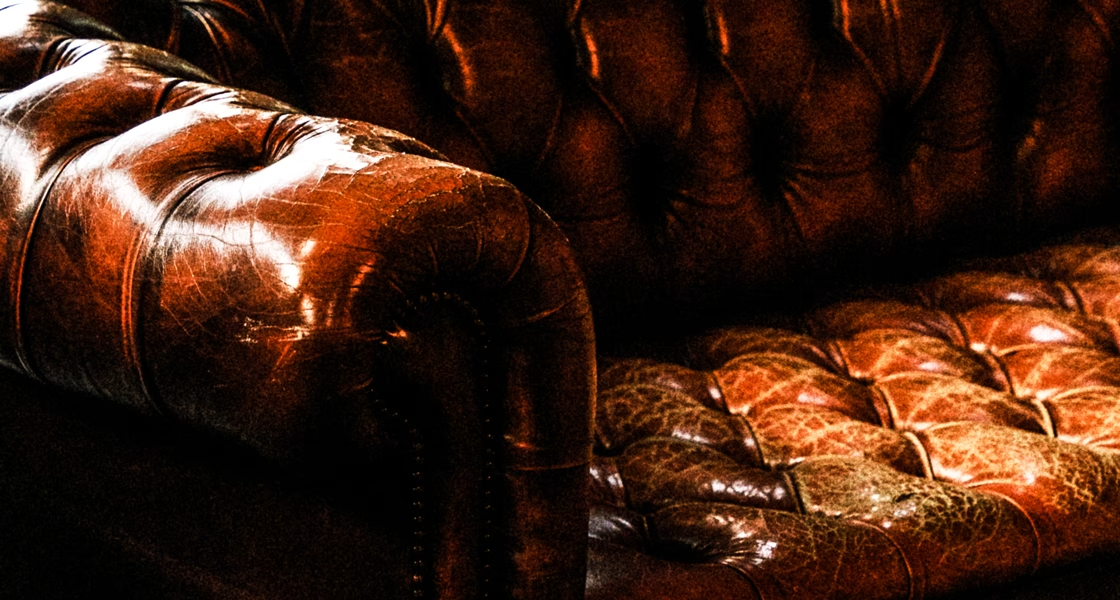
Leathery is the word people reach for first, and it’s the right one, but castoreum is more layered than that alone. There’s a distinct birch tar quality running through it, a smoky, almost medicinal edge sitting alongside the leather, and underneath both of those a warmth that’s genuinely hard to place, somewhere between waxy and faintly sweet. It’s one of the more complex animalic materials I work with, built from a large number of aromatic compounds rather than one or two notes doing all the work.
What Is Castoreum?
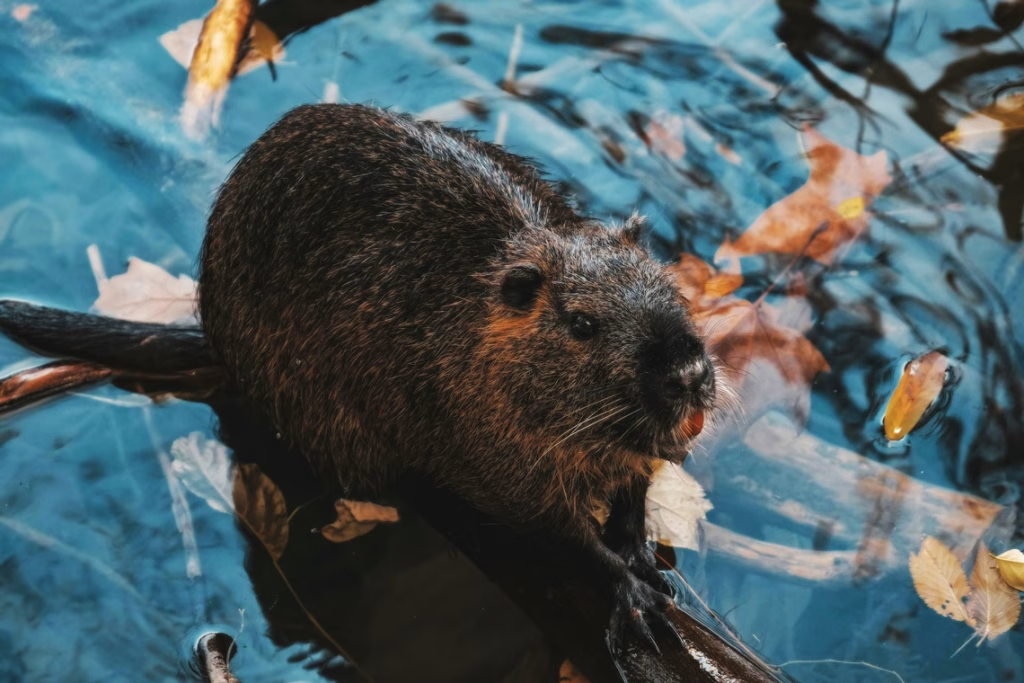
Castoreum is a secretion from the castor sacs of beavers, used by the animal to mark territory when sprayed together with their urine. The name comes from the Greek word for beaver, kastor, which tells you something about how long people have been paying attention to this material.
A Long History, Mostly as Medicine
Castoreum’s history in perfumery is real, but its longer history is medicinal. Through the medieval period it turns up repeatedly in pharmaceutical texts, credited at various points with treating headaches, earache, sciatica, and other ailments. Its use as a fine perfumery material came later, and by the early twentieth century it had become one of the defining materials in classic leather and chypre perfumery, associated with fragrances like Chanel’s Cuir de Russie and Guerlain’s Shalimar.
A Flavour Ingredient Too
Castoreum has a history outside perfumery as well. It’s classified as Generally Recognized As Safe for food use in the US, and has been used in small amounts to flavour vanilla, strawberry, and raspberry products, though the actual volume used across the industry is tiny compared to synthetic vanillin. It’s turned up in tobacco flavouring too, one more example of how far this material has travelled beyond the animal it comes from.
Why It’s Rare Today
Very little natural castoreum makes its way into perfumery now. Most of what people smell described as castoreum in modern fragrances is actually a synthetic reconstruction, built from birch tar, guaiacol, and similar phenolic materials designed to approximate the real thing. That’s part of why so few people have ever actually smelled the genuine material, and part of why I wanted to make it available in a form people could actually try.
What the Absolute Smells Like
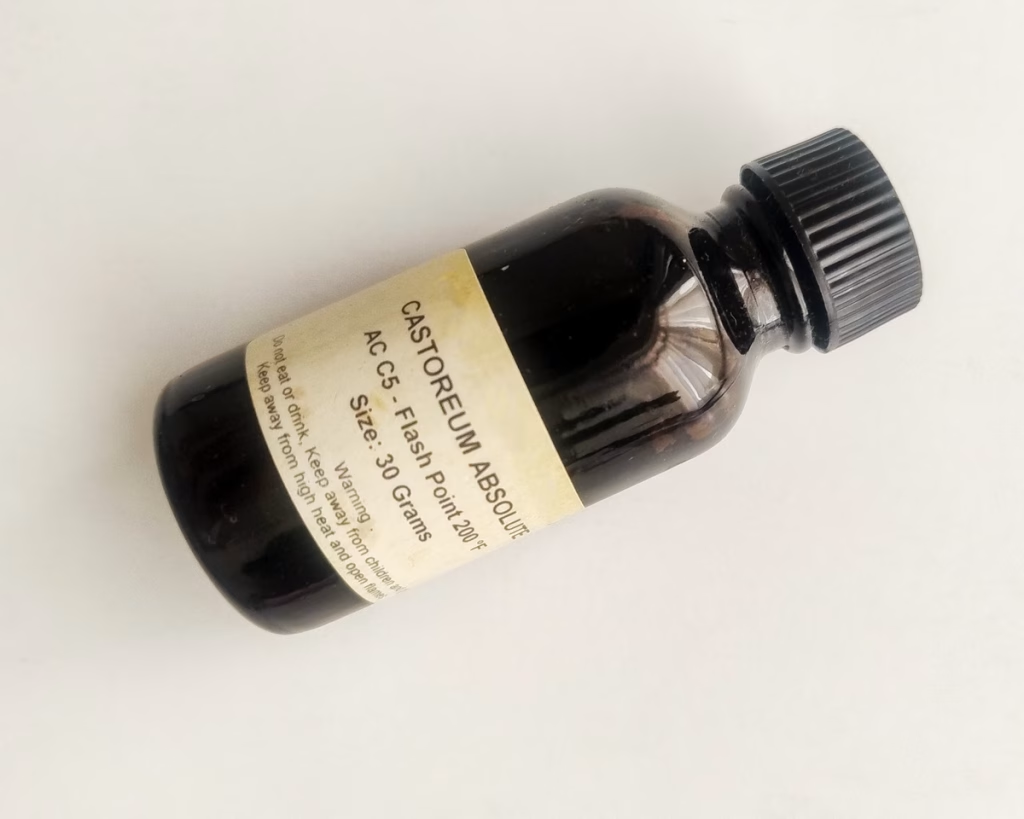
For this infusion I used castoreum absolute rather than raw castor sacs. Absolutes are made by extracting the aromatic compounds from the raw material using solvents and ethanol, then filtering and evaporating those off, which leaves behind a concentrated, highly aromatic oil. Because it’s the absolute and not the raw material, the scent comes through with real clarity and amplitude. The leather and birch tar character is immediate, with a mineral note running underneath that gives the whole thing a dry, dense quality rather than anything soft.
How It Wears
Warm, leathery, and complex on the open, it’s a scent you notice straight away. As it develops on the skin, it becomes gentler and more subtle, and that’s when the Mysore sandalwood really starts to show through, imbuing the skin with its own warm, creamy drydown, with the castoreum still sitting quietly underneath it.
How I Made It
The base is a 2017 Mysore sandalwood, infused with castoreum absolute at 7%, and it’s been maturing since October 2020.
Who It’s For
Best worn layered with another fragrance, where it adds real depth and warmth without taking over. If you’re feeling brave, it can be worn on its own too.
You can find full details on the Castoreum Infusion page.
