
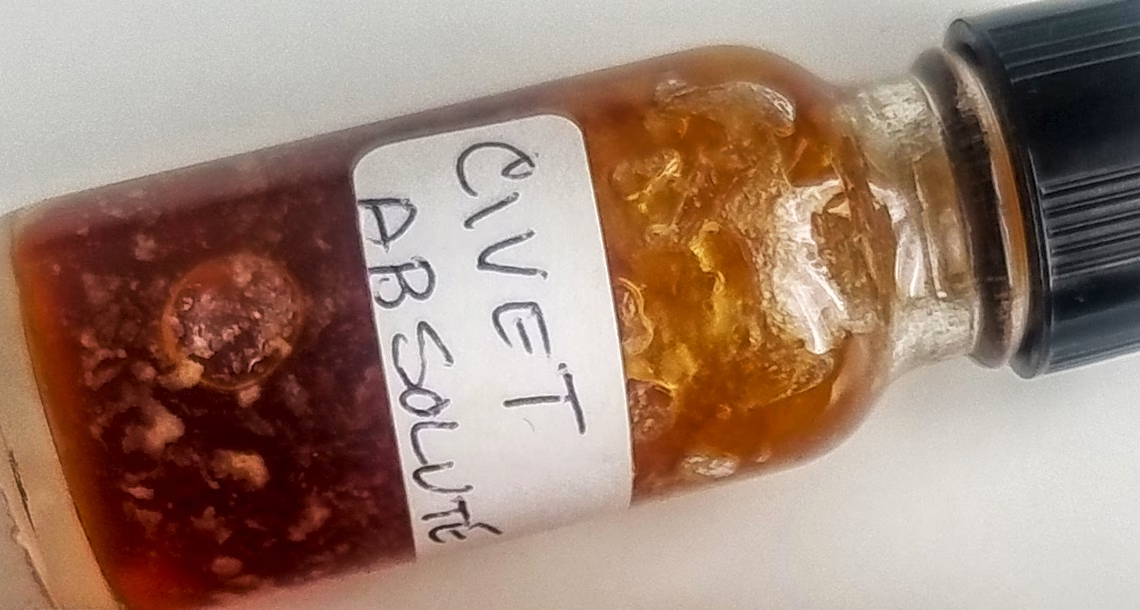
Raw, civet is intense — urinous, and close to what you might call a vomit-like note, and it’s not really possible to soften that description. At full strength it’s genuinely offensive, the kind of smell that makes you understand immediately why most people who’ve never worked with it assume perfumery couldn’t possibly use something like this.
What Is Civet?
Civet is a paste-like excretion from the perineal glands of the civet, a small mammal. In its raw form it bears almost no resemblance to what most people think of as a fragrance material.
A Long History in Perfumery
Civet has a real history in perfumery. The word itself comes from the Arabic zabad, and by the 10th century, Arab scholars such as al-Masudi were already writing about it as a perfume material. It reached Europe a few centuries later, by the 15th and 16th centuries, and quickly became a staple there too — used to scent gloves, pomanders, soap, and tobacco, and considered a genuine luxury at the time. Shakespeare even referenced it directly, with a line in King Lear asking for “an ounce of civet” to mask a foul smell, which says something about how well-known it had become even outside perfumery circles.
What Civet Smells Like in Small Amounts
In tiny quantities, civet stops behaving like the raw material altogether. The harsh, aggressive edge disappears, and what’s left is something magical — it lifts florals in a way nothing else does, opening up layers and nuances in a rose or a jasmine that wouldn’t otherwise be there. A few drops is enough to notice a real difference. It doesn’t smell of civet at that level. It smells like the flower it’s sitting beside, just more alive.
Why I Used 10%
For my civet rose infusion, I used a very fine vintage civet absolute. Most perfumers use civet at a whisper, a fraction of a percent, just enough to work invisibly in the background. I wanted it to actually come through, not just lift the rose from behind the scenes but be part of what you notice. So in Civet Rose, I pushed the concentration all the way up to 10%. At that level, the civet is doing more than enhancing the rose — you can genuinely feel its presence, warm and animalic, sitting underneath the floral.
How It Wears
At 10%, the civet doesn’t hide. In the opening you can smell it clearly — that warm, animalic presence sitting right alongside the rose rather than politely staying out of the way. As it wears, the rose comes forward more, fuller and more velvety than it would be alone, but the civet never fully disappears the way it would at a fraction of a percent. That’s the point of pushing it this high — you’re meant to notice it’s there.
You can find full details on the Civet Rose page.
