
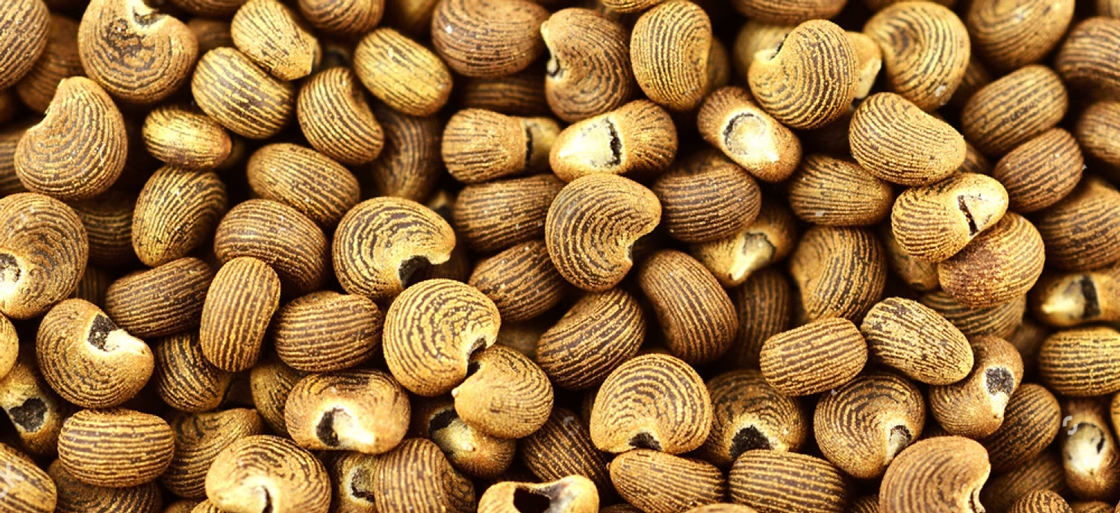
Musky, warm, and softly fruity, with a pear-like sweetness running underneath. It’s the only plant material that genuinely reads as musk, rather than something that vaguely resembles it, and it’s gentler and rounder than the raw animal musks it’s often used to replace.
What Is Ambrette Seed?
Ambrette seed comes from Abelmoschus moschatus, a hibiscus relative grown in India and other tropical regions. The seeds themselves are what’s used, crushed and processed to extract the aromatic compounds, primarily a molecule called ambrettolide, which is responsible for most of that musky character.
A Plant Musk, Not an Animal One
Ambrette is unusual in perfumery because it’s the one genuinely convincing musk that doesn’t come from an animal at all. It’s warm and skin-like the way musk is expected to be, without the raw, animalic edge that raw deer musk or civet carry before they’re diluted. That warmth is closer to something like clean skin than to anything sharp or aggressive.
A Layered Scent
There’s real complexity beneath the musk itself. Alongside the warmth, there’s a wine-like quality, a fruitiness that leans toward ripe pear, and sometimes a faint powdery or iris-like facet as well. It’s a material that unfolds slowly rather than presenting everything at once, which is part of why perfumers value it as much as they do.
Where It Shows Up
I used ambrette seed as one part of Nashwa, alongside civet, ambergris, musk, oud, and orris. It’s not the loudest material in that blend, but it adds a real depth and warmth that plays well against the animalic and floral notes around it. You can find full details on the Nashwa page.
