What Do Animalics Actually Do?
This is a question worth answering properly, because if you've only ever worn mainstream fragrances you may never have experienced what a real animalic can do to a scent.
Real animalics don't just add a note — they transform everything around them. They lift other fragrances, round off what might otherwise be sharp or one-dimensional, and add a warmth and depth that reveals itself slowly over hours on skin. They interact with your own body chemistry in a way that no synthetic can replicate, which is why a fragrance with real animalics smells subtly different on different people. Synthetic musks and animalic-inspired aromachemicals can get you part of the way there. But they are not the same thing, and once you know the real thing, the difference is obvious.
Musk
Musk comes from the musk pod — a small glandular sac found in the abdomen of the male musk deer. The deer produces it naturally, the grains forming and ripening inside the pod over time. Those grains are what perfumers have sought out for thousands of years.
Musk is the absolute king of fragrances. It has been revered across religions and cultures since ancient times — used by royalty, in sacred and religious ceremonies, written about by poets who compared its scent to the remembrance of a beloved. Within the Islamic tradition it holds a particularly special place, mentioned in the Qur'an and in the sayings of the Holy Prophet Muhammad صلى الله عليه وسلم numerous times. He صلى الله عليه وسلم famously referred to it as the best of all fragrances and used it personally.
The Sufi poets wrote of musk as a metaphor for spiritual transformation — as the musk deer's blood enters its musk pod and is transformed into this precious substance, just as the seeker — one who sincerely walks the path of tasawwuf — transforms through patience and devotion into something more noble.
Musk elevates fragrances like nothing else can, lifting up notes and making them dance. Something this special needed an exceptional carrier to be infused in, and that is just what I have used — an extremely special vintage 2002 Mysore sandalwood oil. While it is very common to get musk tinctures in alcohol which smell of musk, it is much more difficult and rarer to get this effect and strength in oil infusions. This infusion has a very distinctive, unmistakable musk scent.
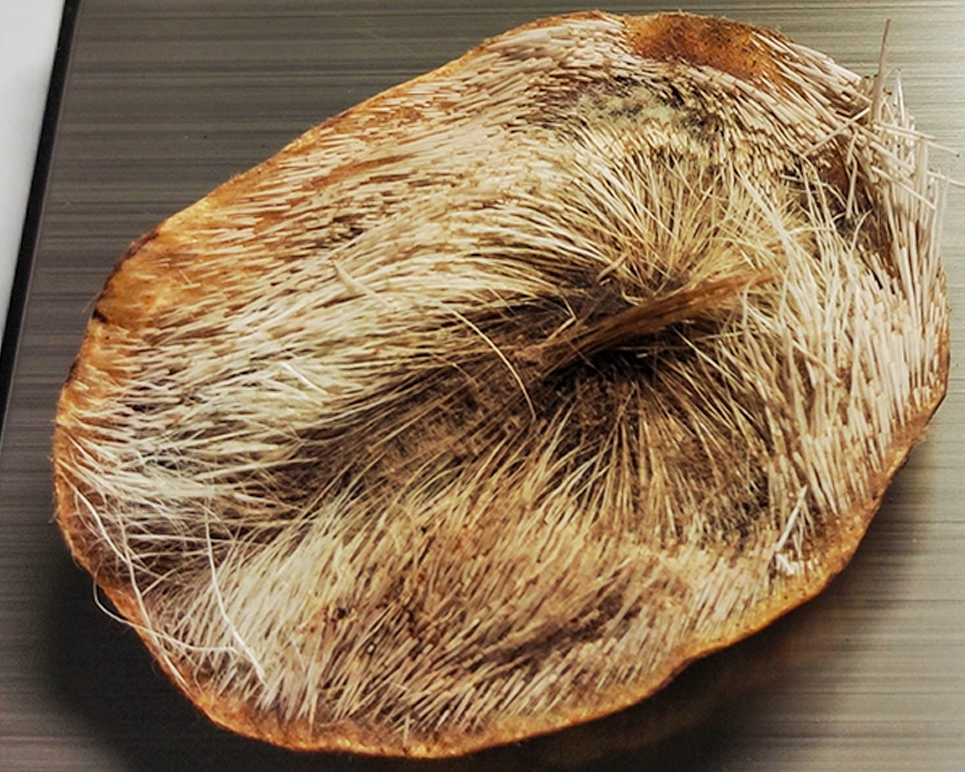
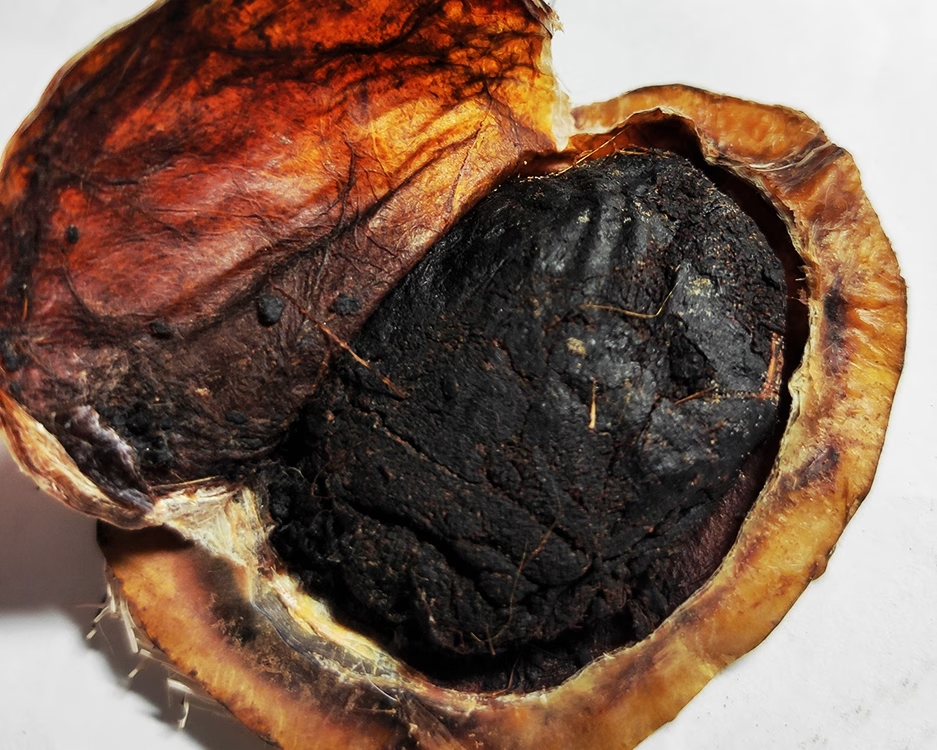
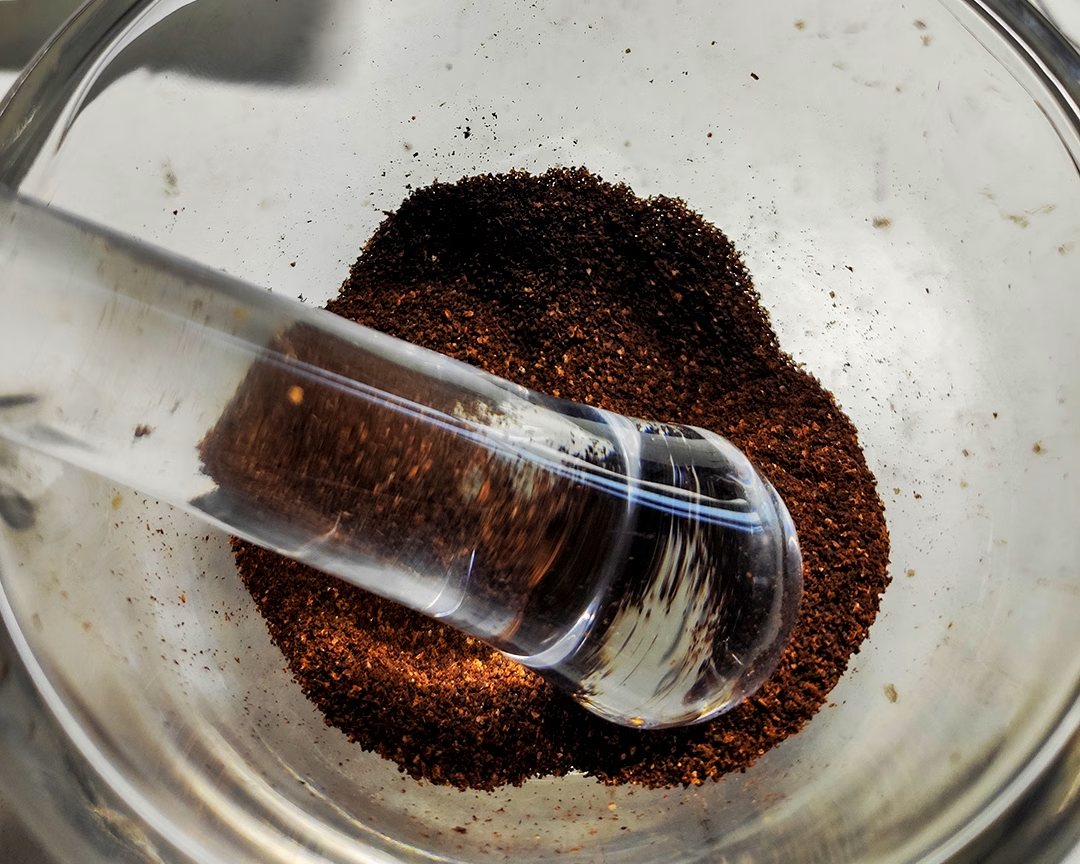
The musk pod was cut open carefully and the grains removed and dried. They were then ground by hand — slowly and patiently, to avoid damaging the precious aromatics — filtered, and ground again, repeatedly, until the grains were extremely fine. These finely ground grains were then combined with the vintage 2002 Mysore sandalwood oil and left to macerate for three years before being filtered. Since then the infusion has continued to mature for several further years, quietly deepening and developing in ways that only time allows.
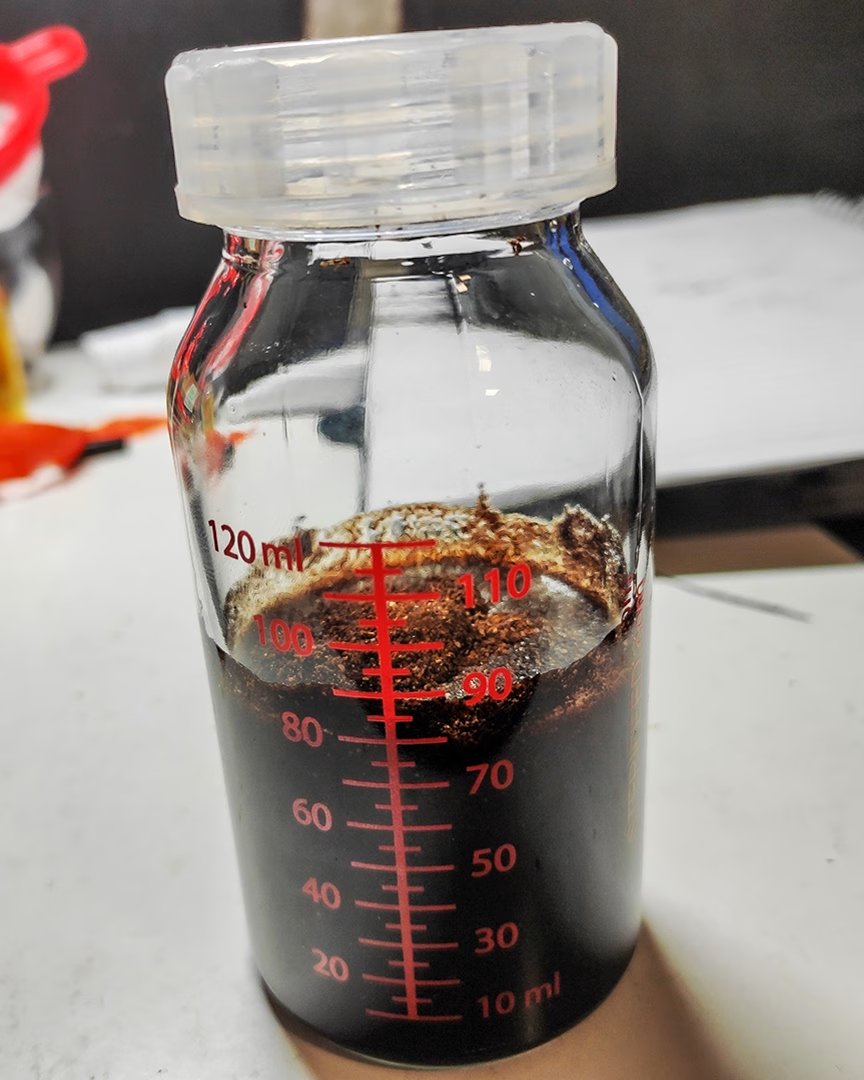

Infused July 2020 · 11% in vintage 2002 Mysore sandalwood
Ambergris
Ambergris is produced in the digestive system of sperm whales — a waxy substance that forms around indigestible matter, eventually expelled and then carried by ocean currents until it washes ashore somewhere. Fresh ambergris smells strongly of the sea, and of something feral. But given years of exposure to sun, salt, and open air, it transforms into something quite extraordinary — subtle, slightly sweet, slightly salty, and radiant in a way that is difficult to describe until you've actually experienced it.
In perfumery, ambergris does something no other material quite manages. It lifts and extends every note it touches, making a fragrance sparkle and linger far longer than it otherwise would. It smooths what might be sharp and adds a refined, glowing quality that becomes unmistakable once you know what you're smelling.
Beautiful pieces of dark grey and brown ambergris were carefully shaved and added directly to the 2016 East Indian sandalwood micro distillation — a rare oil produced in very limited quantity. The ambergris was left to slowly dissolve and infuse into the sandalwood over time. You may notice solid ambergris residue remaining in the bottle — this is simply the real thing, testament to the quality and quantity of ambergris used.
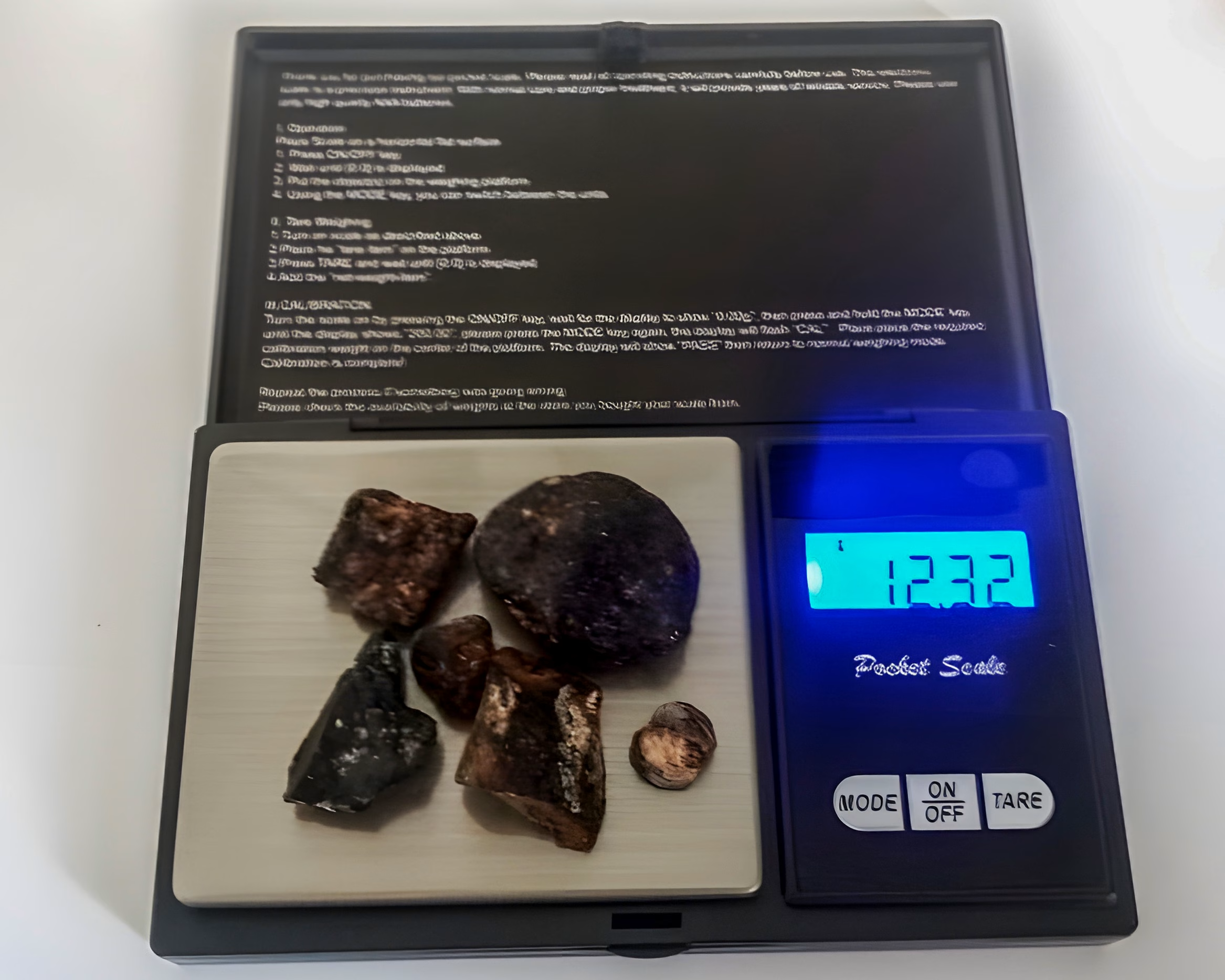
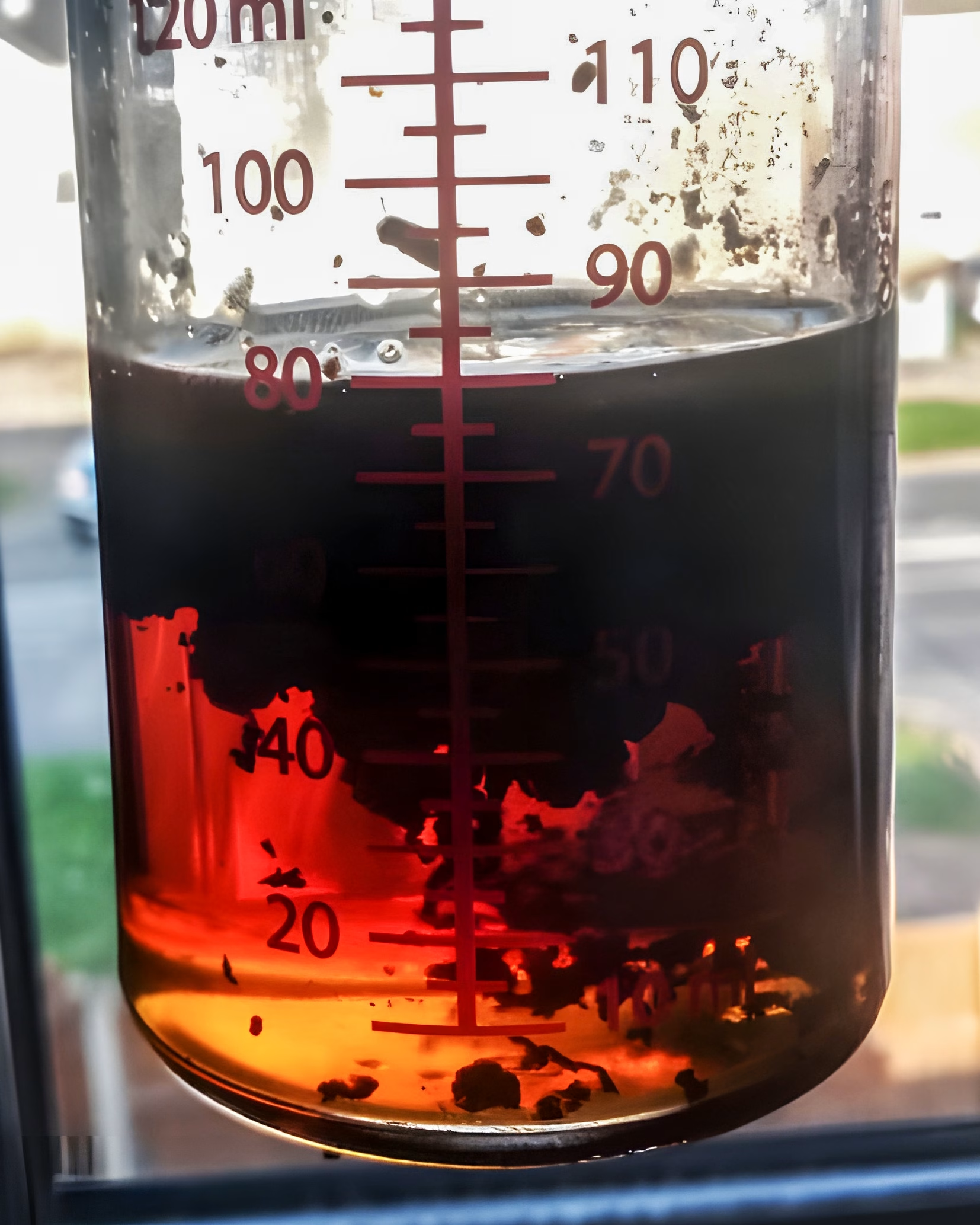
Infused September 2019 · 11% in 2016 East Indian sandalwood micro distillation
Civet
Civet is secreted from the perineal glands of the civet cat. Straight civet, raw and undiluted, has an intense, urinous, deeply offensive smell. In perfumery, at carefully judged concentrations, it becomes something completely different — one of the most powerful and magical things you can do to a floral fragrance.
Most perfumers who dare to use civet at all will use it at less than 1%. I've used 10%. The result isn't a civet fragrance — it is a Bulgarian rose that has been completely transformed. A rose that doesn't just bloom, it growls. The animalic undertone adds a depth and sensuality and wildness that you simply cannot get any other way. It doesn't tame the rose. It awakens it.
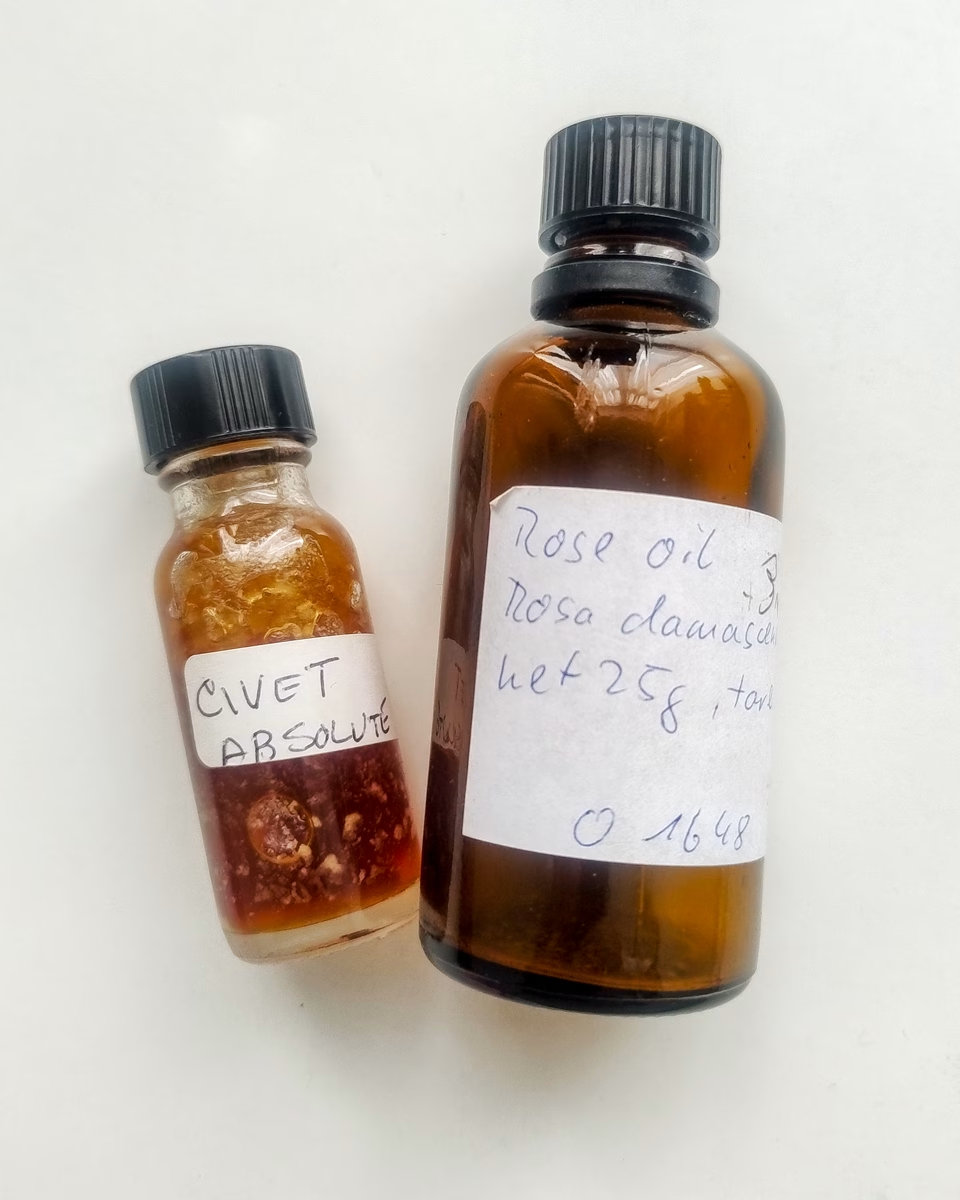
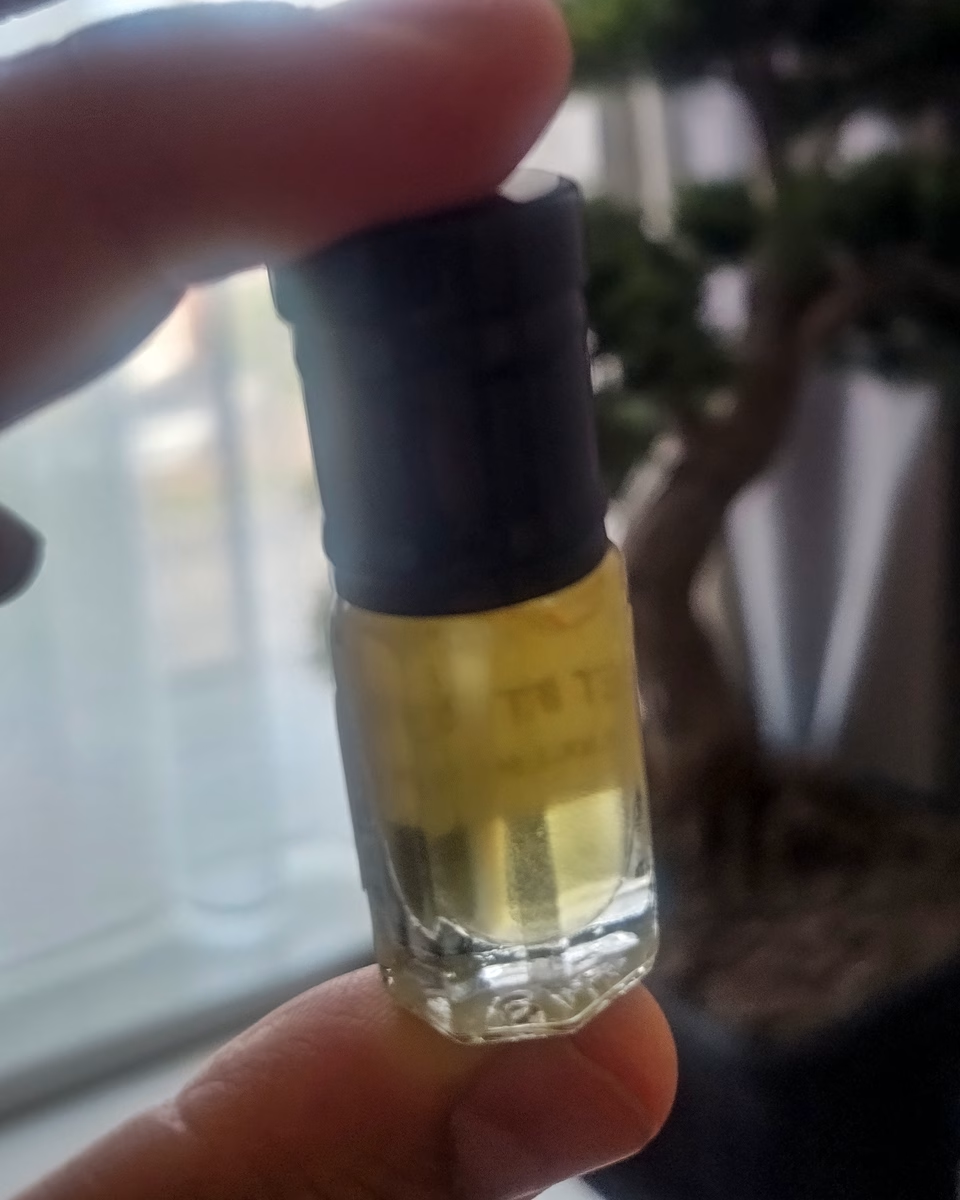
Infused July 2019 · 10% in Bulgarian rose oil
Castoreum
Castoreum comes from the castor sacs of beavers, which they use in the wild to mark territory. It played an important role in many of the great leather and chypre fragrances of the twentieth century — adding a warm, leathery, mineral depth that nothing else could quite provide. It is one of those materials that reminds you what perfumery is capable of when it doesn't have to compromise.
For this infusion I used a castoreum absolute rather than raw castor sacs, which gives clarity and amplitude to the scent rather than the raw funk of the untreated material. It opens warm, leathery, and genuinely complex, then dries down beautifully into the 2017 Mysore sandalwood base — creamy, gentle, and lasting. Best worn layered with another fragrance to add depth and warmth. Can be worn on its own if you're feeling brave.
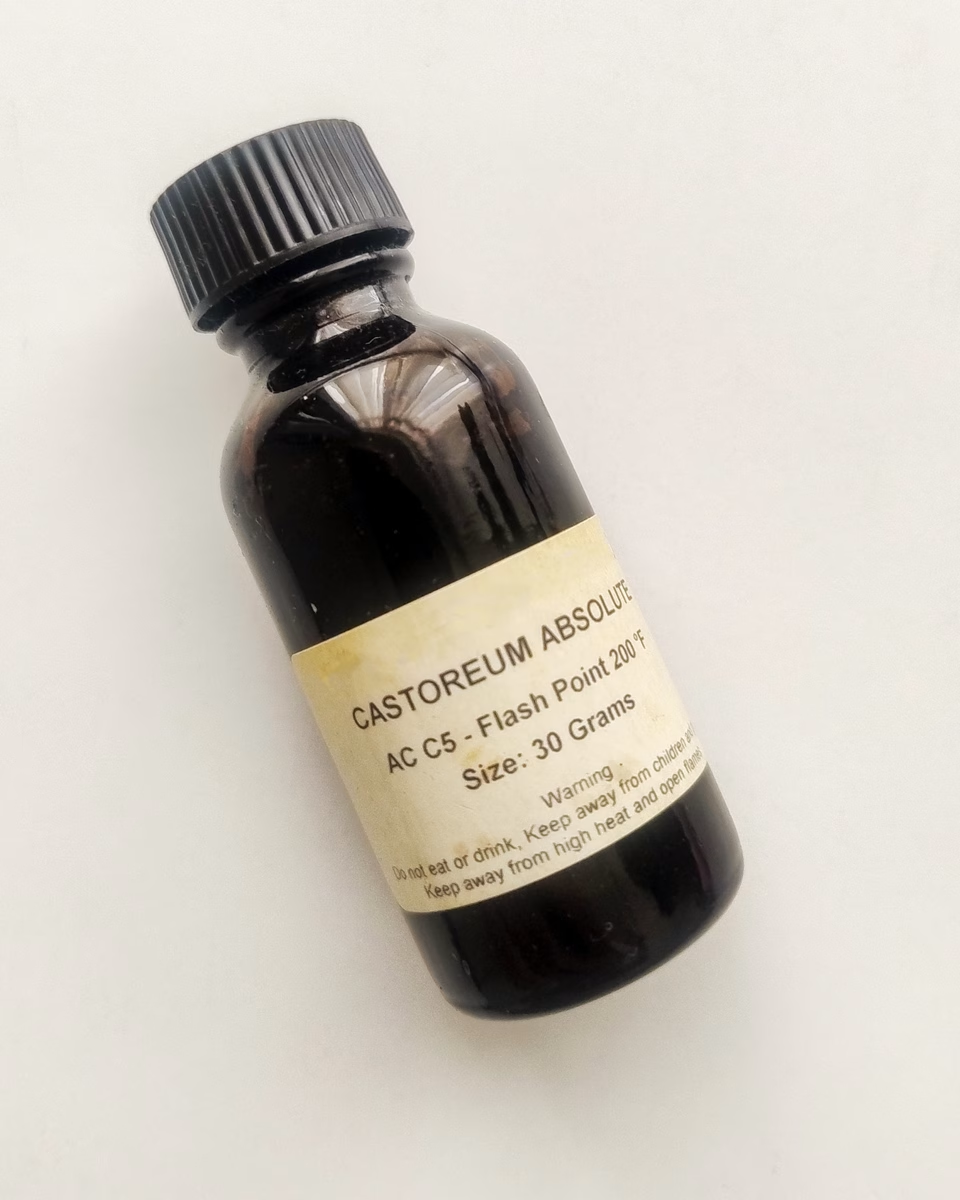
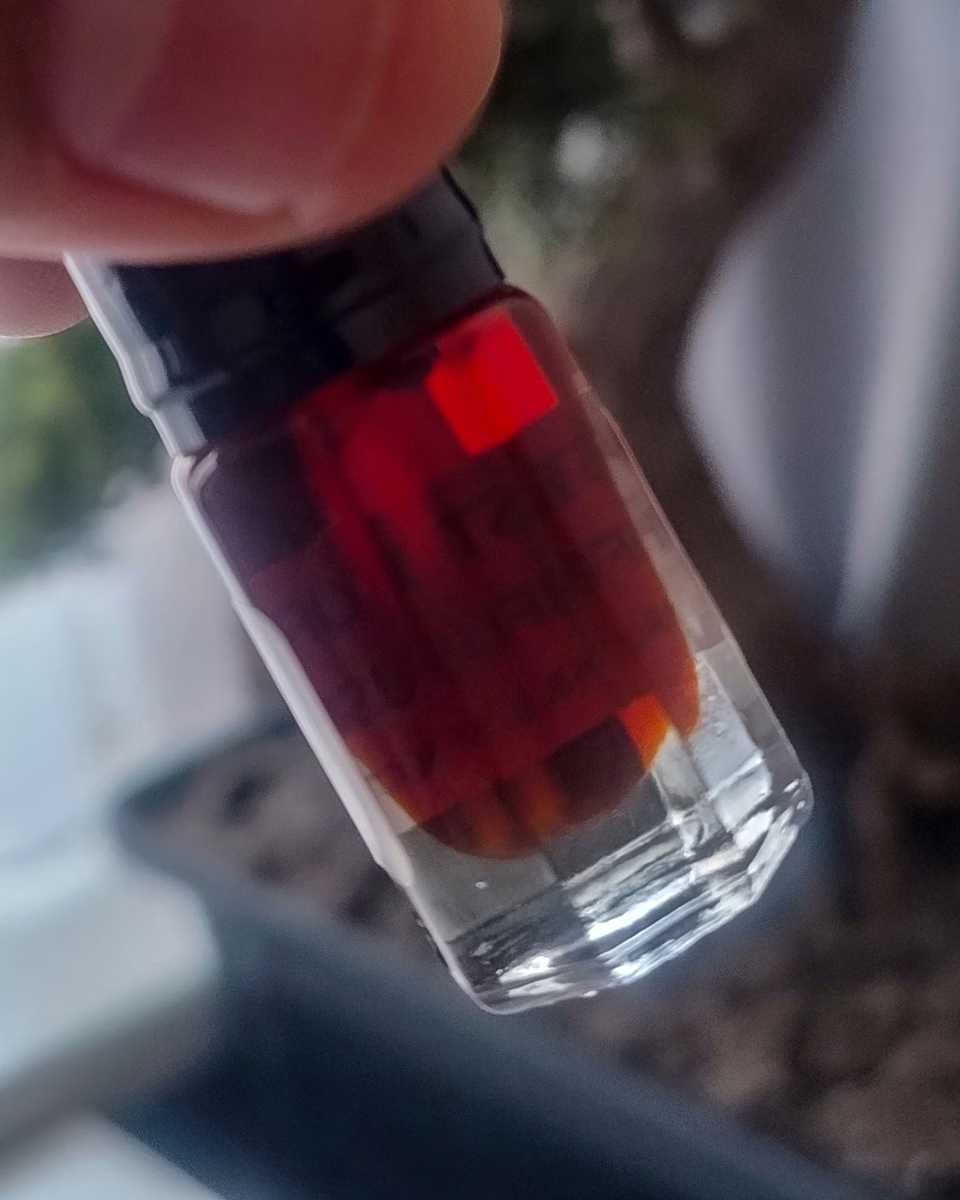
Infused October 2020 · 7% in Mysore sandalwood
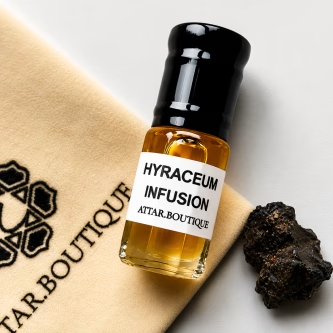
Hyraceum
Hyraceum is probably the least well known of the five materials here, and is the one that tends to surprise people most. Hyraxes are small mammals native to Africa that defecate communally in the same spot for generations, building up deposits on cliff sides and in rocky outcroppings over long periods of time. This accumulation eventually petrifies and hardens into a material that has been used in traditional medicine and perfumery for centuries. Those who have encountered it describe raw hyraceum as somehow combining aspects of musk, civet, ambergris, and castoreum — with threads of oud and tobacco running through it as well.
At 20% in Mysore sandalwood, this infusion does something you might not expect — it isn't animalic or challenging at all. The hyraceum simply makes the sandalwood more. Richer, deeper, more present on the skin. No difficult notes, no funk. Just a beautifully enhanced Mysore sandalwood that reveals its complexity slowly and quietly over time.
Part of the reason for this is the choice of raw hyraceum rather than an absolute. The absolute is a more processed, concentrated extract — potent and challenging. Raw hyraceum, handled correctly, gives a gentler, more integrated result. The raw hyraceum was ground by hand — no easy feat — and combined with a 2017 vintage Mysore sandalwood. It was left to sit and macerate for a couple of years before being carefully filtered. What remained was something quieter and more refined than the raw material itself would suggest.
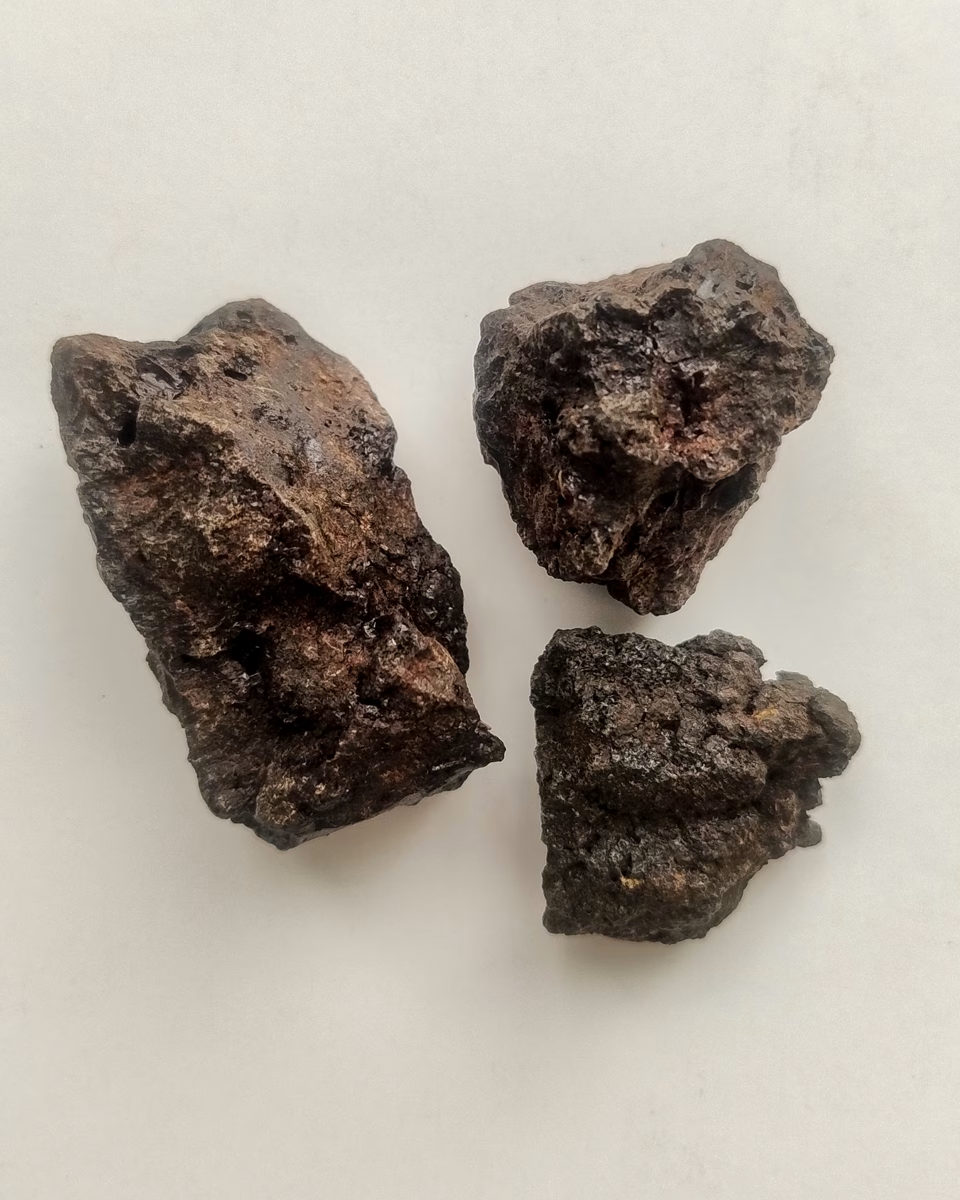

Infused October 2020 · 20% in Mysore sandalwood
A Note on Sourcing
I know these materials raise questions, and I think those questions deserve honest answers.
The deer musk comes from a licensed supplier in Siberia, where hunting is controlled and regulated — the deer are used for both meat and musk, nothing is wasted. The civet used is a vintage absolute, no longer in production. The castoreum is sourced as an absolute from reputable suppliers within the fragrance industry. The hyraceum comes directly from South Africa, collected from ancient petrified deposits on cliff sides — no animal is harmed. The ambergris is from New Zealand, collected from beaches where it washes ashore naturally.
These are not materials I've bought casually or without thought. I've taken as much care over sourcing them as I have over working with them.
On Patience
The oldest infusion here has been maturing since July 2019. The most recent since October 2020. None of them were rushed, because you really can't rush this. An infusion that hasn't had the time it needs is a different, lesser thing — the materials haven't properly found each other yet, the edges are still there, the depth hasn't fully developed. With time, things change quietly. They soften and smooth, and behave differently than they do when young.
I sell these when they're ready. Not before.
New to Animalics?
Every infusion here is available as a 0.2ml sample, and if these materials are new to you, that really is the best place to start. There's no better way to understand what real animalics do than to try them on your own skin — everyone's experience is a little different, and that's part of what makes them so interesting.
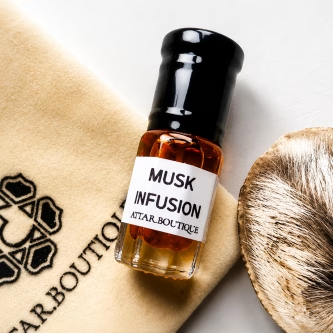
Musk Infusion
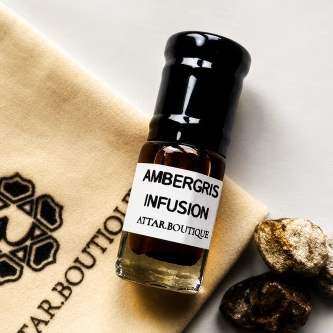
Ambergris Infusion
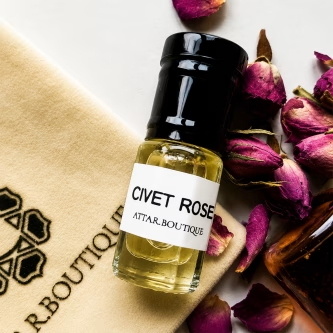
Civet Rose
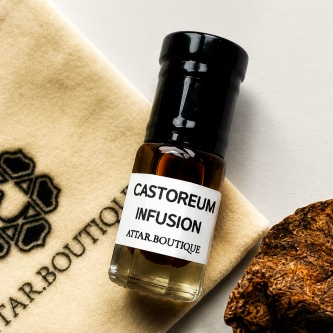
Castoreum Infusion