
Most people have never smelled real ambergris. Most perfumers haven’t either. What they’ve smelled is ambroxan — a synthetic compound designed to replicate the key aromatic molecule in ambergris, without being anything close to the real thing. And most fragrances marketed as amber have nothing to do with ambergris at all. Amber as a scent category means labdanum, benzoin, vanilla — a warm, resinous accord built from plant resins. Nothing to do with ambergris. Different material entirely.
So if you’ve worn amber fragrances and think you know what ambergris smells like, you probably don’t. Yet.
What it actually is
Ambergris forms in the digestive system of sperm whales — a waxy substance that develops around indigestible material, mostly squid beaks. It washes up on beaches, sometimes after decades at sea. Fresh ambergris is feral and unpleasant. Left in the open air for years, exposed to sun, salt, and wind, it transforms into something else entirely.
The transformation matters. Fresh and aged ambergris are almost different materials. What the ageing process produces is subtle and complex — and genuinely difficult to describe until you’ve smelled it.
Grades and colour
Colour is how ambergris quality is traditionally assessed — and it tells you a lot about what’s inside, though not the whole story.
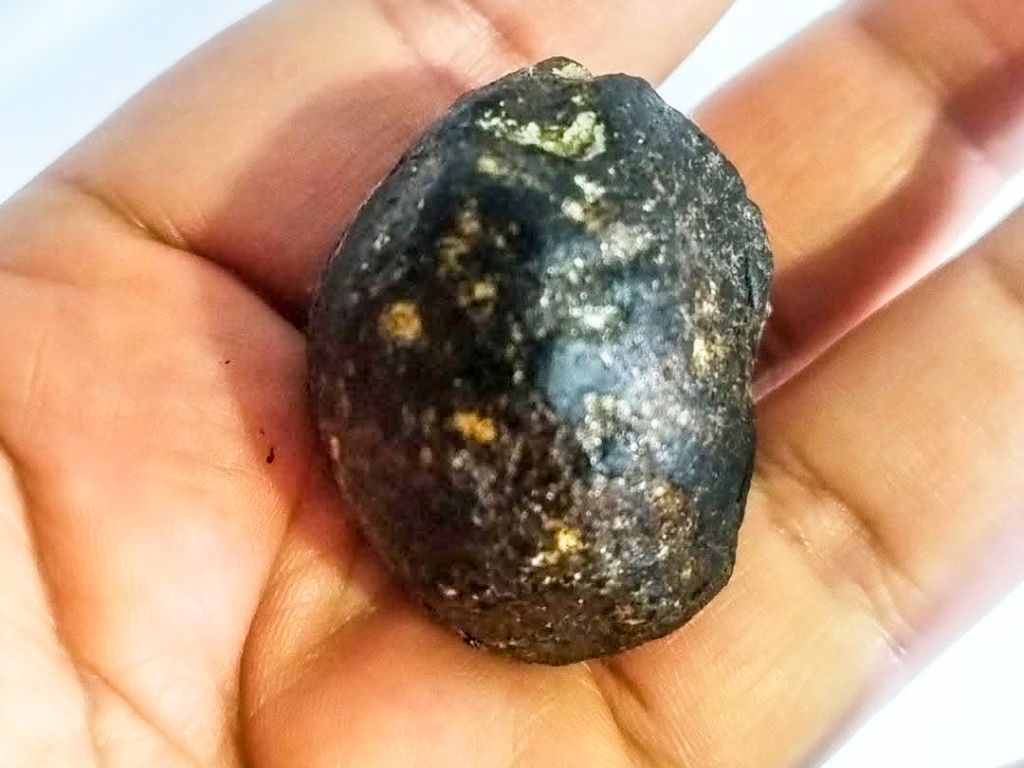
Black ambergris is the freshest. It has a stronger, more animalic character — richer and rawer than aged material. Very fresh black ambergris can be unpleasant and has limited use in perfumery, but well-collected black ambergris has its place. Some perfumers specifically seek it out for darker, more animalic, resinous compositions where that intensity is exactly what’s needed.
Grey sits in the middle — properly aged, harder, with the marine and salty brightness beginning to emerge alongside the animalic depth. This is the grade most commonly used in serious oil-based perfumery. White is the most prized by traditional standards — decades at sea, sometimes longer. Hard, dry, waxy. The scent is subtle, sweet, almost powdery, the animalic quality largely transformed into something clean and quietly radiant.
Between black and white there are browns, dark greys, pale greys — the full spectrum of oxidation and time. The longer ambergris has been at sea, exposed to sun, salt water, and open air, the lighter it becomes and the more the scent refines. Some pieces have been floating for over a century before washing ashore.
The grey ambergris used in the infusion is properly aged — with the characteristic marine brightness and salty lift that grey ambergris does best.
What does it smell like
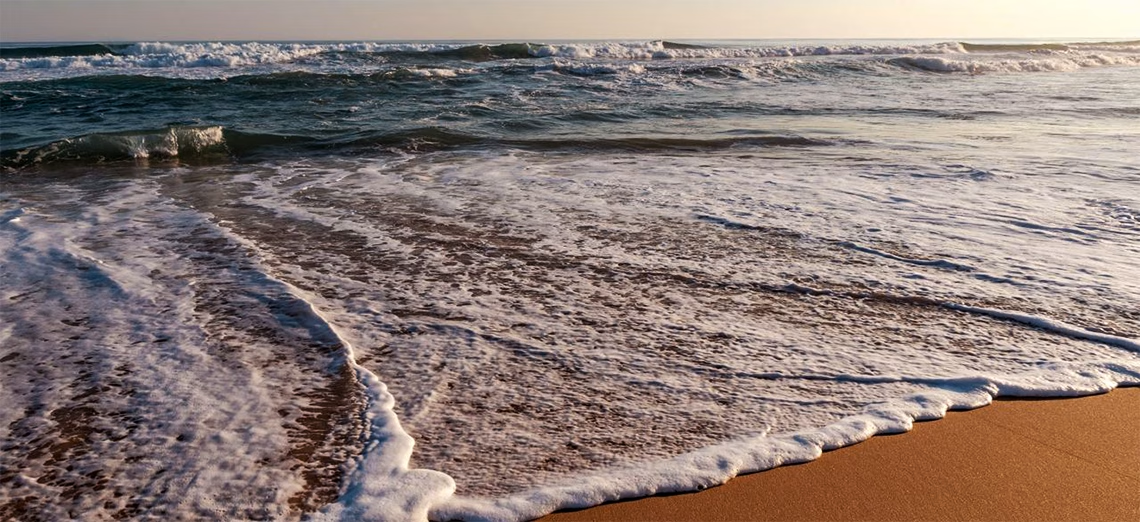
The closest honest description: the air just above the sea on a clear day. Not the sea itself — not seaweed or brine — but something marine and clean and slightly sweet underneath. Warm without being heavy. Present without being loud.
But the smell itself isn’t really the point. What ambergris does to other materials is the point. It lifts them. It extends them. It makes fragrances sparkle and project further than they would on their own. A scent with real ambergris in it has a quality that’s hard to name — a radiance, a sense that it’s alive and moving rather than sitting still on skin. Once you know what you’re looking for, you notice it immediately in anything that contains it.
Ambroxan approximates the clean, slightly woody aspect. It can’t replicate the lifting, the radiance, the way real ambergris interacts with body heat over hours of wear.
This infusion
I used grey ambergris — beautiful pieces of it, dark and substantial — shaved carefully and added directly to a 2016 East Indian sandalwood micro-distillation. A rare oil, produced in very limited quantity. The ambergris was left to dissolve and infuse slowly over time.
You may notice solid ambergris residue in the bottle. That’s intentional — it’s the real thing, still present, testament to the quality and quantity used.
What it does to the sandalwood is exactly what ambergris does best. It makes it sparkle. The sandalwood was already exceptional — warm, buttery, complex. The ambergris makes it brighter and lighter, and gives it a salty lift that’s unlike anything else I’ve worked with.
How to wear it
Apply by dabbing directly onto pulse points — wrists, neck, the inside of the elbow. A small amount is enough. It develops slowly with body heat, the marine brightness of the opening giving way over time to something warmer and more settled. It has genuine longevity. It doesn’t spike and disappear.
It also layers well. Applied under or alongside another attar or fragrance, it extends everything and adds a brightness that’s difficult to achieve any other way. Other people will often notice it before you do.
A 0.2ml sample is the right way to start. Same oil as the full bottle. Try it on your skin, wear it through the day, see what it does.
